Below is a list of some common terms used in electronics.
abcdefghijklmnopqrstuvwxyz

- Adder
- Address
- Ampere (A)
- ASCII
- Binary
- Boolean Logic
- Capacitor (C)
- Current
- Digital
- Input/Output (I/O)
- Operating System (OS)
- Processor
- Random Access Memory (RAM)
- Resistance
- Storage
A circuit that adds two binary numbers together.
A location information is stored in either memory or storage. This is usually
a number indicating row and column.
This is the measurement of current flowing throw a circuit. 
This is pronounced (Ask-EE). This is a stander 7-bit variable for transferring
characters, letters and numbers between digital circuits.
The very basic langue of a circuit. 1 represents a circuit on and 0
represents a circuit off.
Boolean Logic
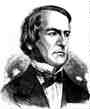
Boolean Logic was the invention of a mathematician of the name Bool. Boolean
Logic t uses 1, 0,AND, OR, and NOT to represent mathematical decisions.
Capacitor (C)
A store house for electrical charge. This device is basically tow metal
plates a very small distends apart.
Current is the rate at witch electrons flow throw a circuit. Picture a circuit as a river, we could have a raging river or a little trickling
stream. This is the driving force of the circuit and it is measured in amperes
or amps. To find the amount of current in a circuit us this formula.
I = average currents in amps.
/\q = the change in current
"coulombs".
/\t = change in time
A representation of a 1 for high and 0 for low.
I/Os are any way the electronic circuit gets and send information to the
outside world. In your computer's case an input would be the keyboard and
an output would be the monitor.
This is a program that handle all of the
The work hoarse of any computer. This device does all the math
operations of a system.
A sort term storage for information that will be deleted if power is remove
form it. This type does not need to be accessed in a sequence, thus it can
be randomly accessed.
Resistance limits the current flow throw a circuit. This is like rocks
in a river, they will slow down the current but will not stop it. Different
materials have different resistive property's and the person to discover this
was George Simon Ohm. The unit of measurement he invented is called ohms,
witch is represented with  .
.

R = resistance in
"ohms"
l = length in feet
A = cross-sectional are in circular mils
p = the resistively of the material
This device can hold information even after the power is removed. This
is often a hard drive, EEPROM, EPROM, etc.
Author information goes here.
Copyright © 1999 [OrganizationName]. All rights reserved.
Revised: April 20, 2003
.
